


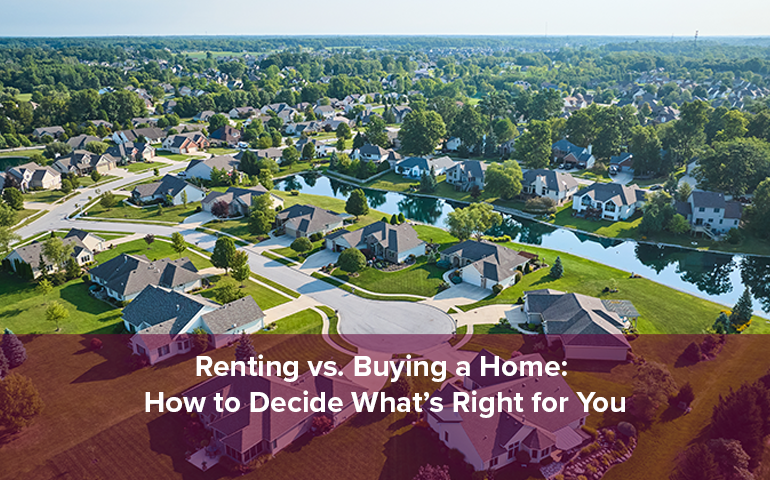
Renting vs. Buying a Home: How to Decide What's Right for You
A place to call home is more than four walls and a roof. It is where your routines take shape, memories are made, and plans for the future begin. But deciding whether to rent or buy a house can be surprisingly complicated. Renting offers flexibility and fewer maintenance responsibilities, while buying provides the opportunity to build equity and create a space that truly feels like your own. Neither option is automatically better. The smartest choice depends on your finances, lifestyle, and how long you plan to stay in one place. Before signing another lease or starting your home search, consider what each path could mean for your life. There is a reason renting remains attractive to people at many stages of life. It allows you to enjoy a home without taking on all the responsibilities of ownership. For someone starting a new career, exploring different neighborhoods, or anticipating a relocation, renting can provide valuable breathing room. Greater flexibility: Moving is generally easier when your lease ends, making renting appealing if your plans could change. Fewer maintenance responsibilities: Landlords typically handle major repairs and property maintenance. Lower upfront expenses: Security deposits and initial rental costs are often significantly less than a home down payment and closing costs. Predictable short-term expenses: Rent payments are usually established for the duration of your lease, although utilities and other expenses may vary. Renting can also give you time to improve your credit, reduce debt, or save toward a future home purchase. The convenience of renting comes with limitations. Monthly rent payments do not build ownership equity, and landlords may increase rent when a lease renews. You may also face restrictions on pets, decorating, renovations, or other personal preferences. For renters who hope to settle into a community for years, those limitations can become frustrating. Homeownership changes your relationship with the place you live. Instead of following a landlord's rules, you gain greater control over your surroundings. Want to remodel the kitchen, plant a garden, or create a home office? As an owner, you generally have more freedom to make those decisions, subject to applicable community restrictions. But the financial benefits of homeownership are often what make buying especially appealing. Equity is the difference between your home's market value and the amount you owe on your mortgage. As you pay down your loan, you gradually increase your ownership stake. If your property appreciates, your equity may grow further. Unlike renting, where monthly payments provide housing without creating ownership, a portion of your mortgage payment can help build a long-term asset. However, home values can fluctuate, and appreciation is never guaranteed. With a fixed-rate mortgage, your principal and interest payments remain consistent throughout the loan term. Property taxes, insurance, maintenance expenses, and association fees may still increase, but the predictability of a fixed mortgage payment can make long-term budgeting easier. Homeownership can also offer a stronger sense of permanence, especially for households hoping to establish roots in a neighborhood. A common mistake is comparing monthly rent directly with a mortgage payment without considering the full financial picture. Here is how the two options generally differ. Expense Renting Buying Upfront costs Security deposit, application fees, initial rent Down payment, closing costs, inspections Monthly payments Rent and applicable fees Mortgage, taxes, insurance, possible HOA fees Maintenance Usually landlord's responsibility Homeowner's responsibility Equity No ownership equity Potential to build equity Flexibility Generally easier to relocate Selling can take time and money Long-term costs Rent may increase Ownership costs can fluctuate Consider a hypothetical example. Suppose you currently pay $1,600 per month in rent. That totals $19,200 annually. Now imagine purchasing a home with a total monthly housing payment of $1,900, including principal, interest, property taxes, and homeowners insurance. Buying would cost $300 more each month before accounting for maintenance, repairs, and other ownership expenses. Yet part of that mortgage payment would reduce your loan balance. The important question is not simply which monthly payment is lower. It is whether the overall financial commitment fits comfortably within your budget and supports your future goals. Your expected timeline can significantly influence the rent-versus-buy decision. Buying a house involves upfront expenses, and selling it later may include commissions, closing costs, moving expenses, and other fees. If you expect to relocate within a year or two, renting may be the more practical option. If you plan to remain in the same area for five years or longer, purchasing becomes worth exploring because you may have more time to spread out transaction costs and build equity. Five years is not a guaranteed break-even point. The actual calculation depends on home prices, mortgage rates, appreciation, rent increases, and ownership expenses. Your lifestyle matters just as much as the numbers. A career change, growing family, or desire to live closer to loved ones can all affect how long a particular home will suit your needs. Not everyone needs to wait for a perfect financial situation before considering homeownership. However, certain indicators suggest that buying may be realistic. 1. Your income is dependable. You have enough financial stability to manage regular mortgage payments and other household expenses. 2. You have savings beyond your down payment. Closing costs, moving expenses, emergency savings, and unexpected repairs deserve room in your budget. 3. You know what you want from your next home. Whether that means extra bedrooms, outdoor space, or a shorter commute, understanding your priorities helps you make a more confident decision. You also do not necessarily need a 20% down payment. Certain mortgage programs allow qualified buyers to purchase with significantly less, depending on eligibility and loan requirements. Buying is often described as an important milestone, but renting can be a deliberate financial strategy rather than a temporary compromise. Perhaps you are paying off student loans, saving for a business, or deciding where you want to establish your career. Renting may allow you to pursue those priorities without committing your savings to a property. It can also help you explore a neighborhood before deciding whether you want to live there permanently. The goal should never be to buy simply because you feel pressured to do so. It should be to choose housing that supports your financial well-being and everyday happiness. Not necessarily. Buying may offer long-term financial benefits, but homeowners also pay property taxes, insurance, maintenance, and transaction costs. The more affordable choice depends on local housing prices, financing, and how long you plan to stay. No. Rent pays for housing, flexibility, and often reduced maintenance responsibilities. Although it does not build home equity, renting can still be financially sensible. The amount depends on the purchase price, mortgage program, and your financial circumstances. Plan for a down payment, closing costs, moving expenses, and an emergency fund. Some buyers may also qualify for down payment assistance programs. Waiting may help if lower rates improve affordability, but future rates are unpredictable. Home prices and competition can also change. Focus on whether you can comfortably afford a home under current conditions. Possibly. Different loan programs have different credit requirements. A mortgage lender can help you understand available financing options and steps that may improve your eligibility. The rent-versus-buy decision becomes much easier when you understand your options in the local housing market. Whether you are curious about your purchasing power, comparing neighborhoods, or wondering what homes might fit your monthly budget, Berkshire Hathaway HomeServices Stouffer Realty can help you explore the possibilities. Connect with a local real estate agent today to discover whether renting or buying makes the most sense for your next chapter.

Renting a Home: Freedom Without the Long-Term Commitment
Why Renting Might Be the Better Fit

The Trade-Offs of Renting

Buying a Home: More Responsibility, More Possibilities

Building Equity Over Time
Creating Greater Housing Stability

Rent vs. Buy: Comparing the Real Costs
The Five-Year Question: How Long Will You Stay?

Three Signs You May Be Ready to Buy

When Renting Is Actually the Smarter Financial Move
Frequently Asked Questions
Is buying a house cheaper than renting?
Is renting really throwing money away?
How much money should I save before buying a house?
Should I wait for mortgage rates to drop before buying?
Can I buy a house with less-than-perfect credit?
Find Out What Homeownership Could Look Like for You
