


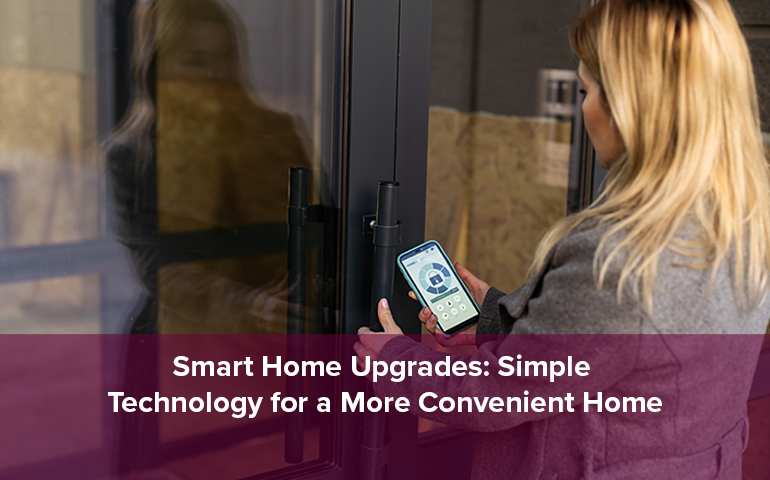
Smart Home Upgrades: Simple Technology for a More Convenient Home
A house does not have to look futuristic to be smart. In fact, some of the most useful smart home technology is surprisingly subtle. A thermostat adjusts the temperature before you get home. A doorbell lets you see who is at the front door while you are away. A water sensor sends an alert before a small leak becomes a much bigger problem. For homeowners, smart home devices can offer a useful combination of convenience, comfort, security and efficiency. The challenge is deciding which upgrades will actually improve daily life and which ones are more gadget than solution. Instead of trying to automate an entire house at once, it often makes more sense to start with the problems you would most like your home to solve. The best smart home upgrade is not necessarily the newest or most impressive. It is the one that removes a small frustration from your routine. Do you regularly wonder whether you locked the front door? A smart lock may be useful. Does your home feel too warm when you return from work? Consider a smart thermostat. Are packages frequently delivered while you are away? A video doorbell could make it easier to keep an eye on the front entrance. Starting with a specific need can also prevent a common problem: buying several connected devices and discovering that you rarely use their smart features. Heating and cooling are natural places to introduce smart technology because temperature affects daily comfort throughout the year. A smart thermostat can allow homeowners to create schedules, make adjustments remotely and, depending on the model, use occupancy or learning features to modify settings automatically. Being able to check the thermostat from a phone can be particularly handy during vacations, unexpected schedule changes or extreme weather. Before purchasing one, check compatibility with your home's HVAC equipment and wiring. Features vary considerably between models, so the most sophisticated thermostat is not automatically the best match for every house. The entrance is another area where a relatively small device can change how a household operates. Video doorbells can provide notifications when someone approaches or rings the bell, while compatible cameras can help homeowners monitor other areas of the property. Smart locks may allow doors to be locked or unlocked without a traditional key and can make temporary access easier for certain guests or service providers. Think beyond features when choosing connected security products. Consider where recordings are stored, whether a subscription is needed for features you want, what privacy controls are available and how the device functions if the internet connection goes down. Smart lighting can start with something as simple as a connected bulb or plug. Homeowners can schedule lights, create routines or control compatible fixtures remotely. That can be useful for an exterior light that should come on each evening, a lamp you would otherwise walk across a dark room to reach or several lights you want to switch off at bedtime. Smart plugs can offer a similarly easy entry point. They can add connected controls to certain lamps and small household devices without requiring homeowners to replace the items themselves. For larger lighting projects, smart switches may provide a more integrated solution, although installation requirements should be considered before purchasing. Some connected technology is most valuable when something goes wrong. Smart water-leak sensors can be placed near appliances, sinks, water heaters and other areas where leaks may occur. If water is detected, the device can alert the homeowner. Certain systems can go further by monitoring water use or working with automatic shutoff equipment. Connected smoke and carbon monoxide alarms may also provide remote notifications and additional status information, depending on the product. These devices may not be as entertaining as voice-controlled lighting, but early notification of a household problem can make them especially practical additions. It is easy to buy smart devices one at a time. Eventually, however, homeowners may discover they have accumulated several apps, accounts and products that do not communicate well with each other. Before expanding a smart home setup, look at compatibility. Many newer products support broader smart-home standards such as Matter, while others are designed primarily around specific platforms or ecosystems. Checking compatibility before purchasing can make future expansion much easier. Also consider whether a device requires a hub, a paid subscription or cloud storage. The purchase price may not represent the full long-term cost of ownership. Every connected device introduces another account, password or connection that deserves attention. Basic digital habits can make a meaningful difference. Use strong, unique passwords for smart-home accounts, enable multifactor authentication when available and keep devices and their apps updated. Homeowners should also review privacy settings instead of automatically accepting every default. It is worth asking what information a device collects and whether all of its features need to be enabled. A smart home should make life easier without requiring homeowners to give every connected product more access than necessary. Smart technology can be a nice convenience, but homeowners should be careful about treating gadgets as guaranteed value-boosters. Buyers have different preferences. One person may love an automated home, while another may prefer conventional switches, locks and thermostats. Built-in technology that is intuitive and easy to operate may have broader appeal than an elaborate system that requires a lengthy explanation. If you are preparing to sell, also think about what stays with the property. Accounts should be disconnected appropriately, personal information should be removed and the next owner should have clear information about devices intended to remain in the home. A complicated smart-home setup should not become a complicated moving-day problem. Not always. Some devices connect directly through Wi-Fi or another supported technology, while others use a hub or bridge. Check the requirements before purchasing. It depends on the product. Smart plugs and many bulbs can be relatively straightforward, while thermostats, switches, locks and wired devices may involve additional installation considerations. Some may retain basic or local functionality, while remote access and certain automated features may stop working. This varies by device and system. Not simply for the sake of having it. Consider whether the improvement is useful, intuitive and appropriate for the property. Other home improvements may be more important depending on the home's condition and likely buyers. Start with a recurring inconvenience. Temperature, lighting, front-door access and leak monitoring are all practical categories to consider. Solving one real problem is usually a better starting point than trying to automate everything. Smart home technology does not need to turn your house into a technology showcase. A few carefully selected devices can make everyday routines simpler while adding useful controls for comfort, security and home maintenance. If you are considering home improvements because a sale may be on the horizon, Berkshire Hathaway HomeServices Stouffer Realty can help you look at your plans through a real estate lens. Connect with a local real estate professional to discuss which updates may make sense for your home and your next move.

Start With the Device You Will Actually Use

Smart Thermostats Put Comfort on a Schedule

Give the Front Door a Technology Upgrade
Smart Lighting Is About More Than Turning Off a Bulb

The Smart Devices You Hope Never Have to Use
Build a System, Not a Drawer Full of Gadgets

Do Not Forget the Unexciting Part: Security

Can Smart Home Features Help When Selling?
Frequently Asked Questions
Do I need a smart-home hub?
Are smart home devices difficult to install?
Do smart devices still work if the internet goes out?
Should I install smart technology before selling my home?
What smart device should I buy first?
Make Your Home Work Better for the Way You Live
